
Proven Systems for a New Era of American Transportation
The Fastest Passenger Rail Technology in the World
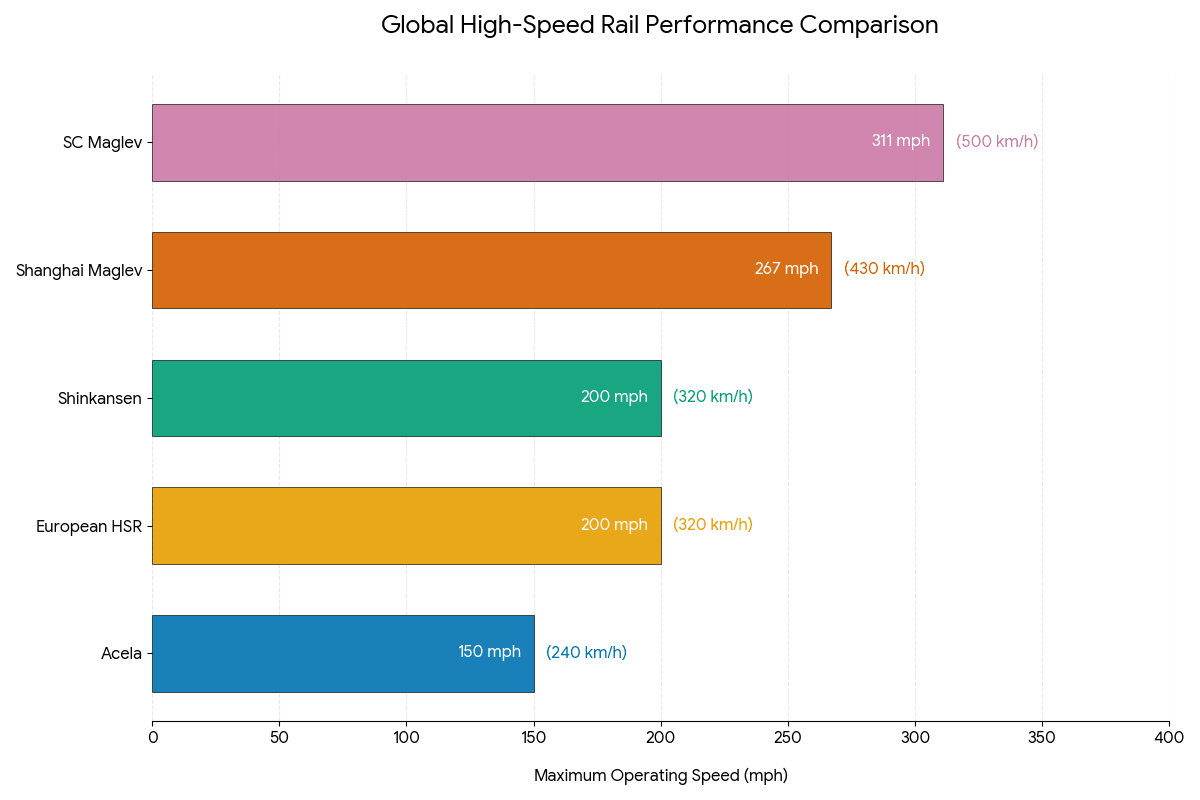
Superconducting Maglev (SCMAGLEV) is the most advanced passenger transportation technology ever developed for commercial deployment. Designed and built by JR Central, the SCMAGLEV vehicle levitates above its guideway using superconducting magnets.
In testing, the SCMAGLEV has reached 375 mph — a world record for manned rail vehicles. Its operational deployment is planned to connect Tokyo and Nagoya in 40 minutes, a journey that currently takes approximately 90 minutes by Shinkansen.
In the United States, SCMAGLEV is the proposed technology for the Northeast Corridor, where it would reduce travel time between Washington, D.C. and New York City to approximately one hour.
The Physics Behind SCMAGLEV
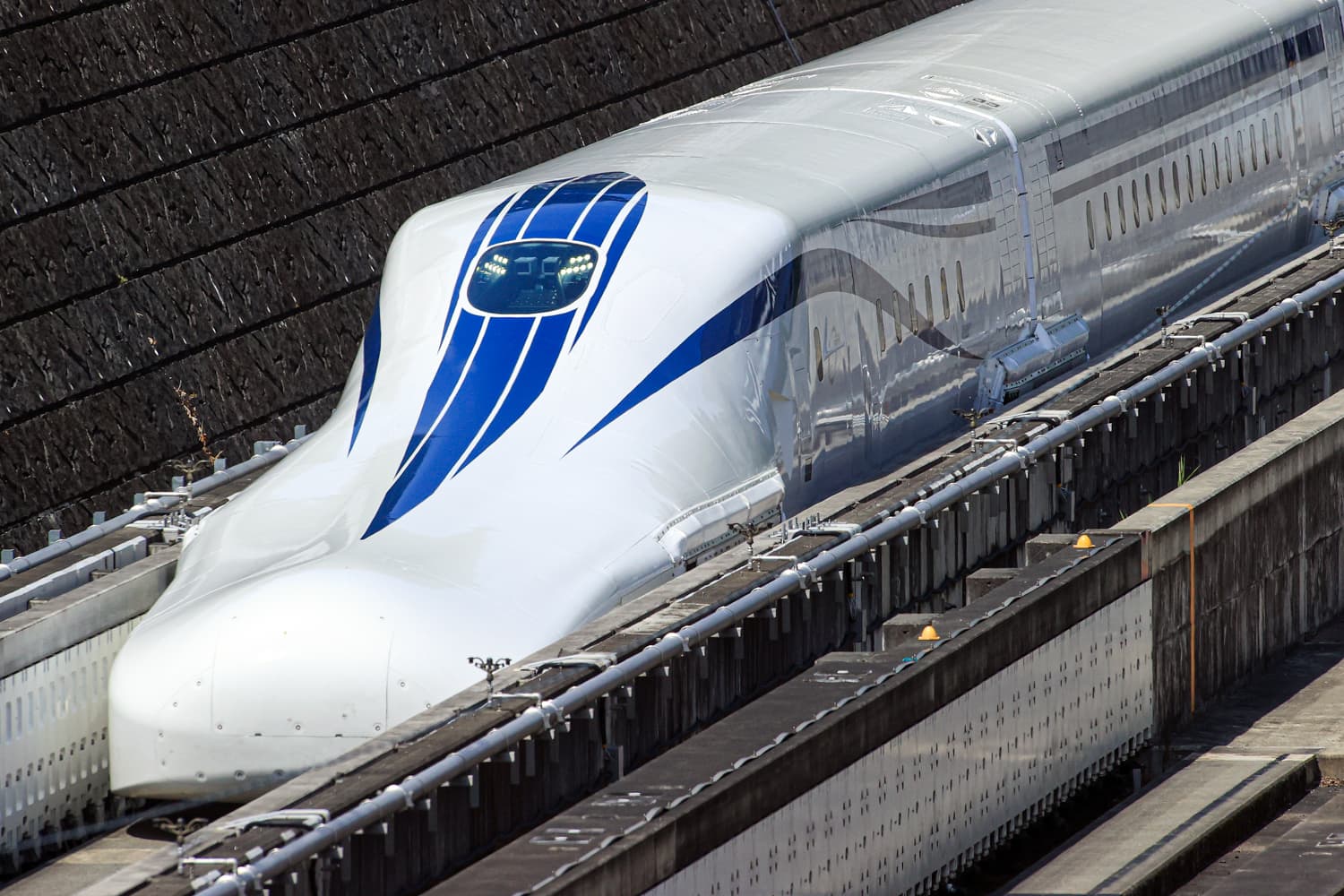
At the heart of SCMAGLEV technology are superconducting magnets mounted on the vehicle. These magnets are cooled to around −255° C (−427° F), at which temperature the electrical resistance drops to nearly zero. This allows current to flow almost indefinitely, enabling lightweight, powerful, semi-permanent magnets.
These onboard superconducting magnets interact with coils attached to the guideway side wall to produce both the levitating force that lifts the vehicle 4 inches above the guideway and the propulsive force that drives it forward — all without mechanical contact.
The result is a vehicle that levitates, accelerates, and decelerates entirely through electromagnetic interaction.
The World Standard for High-Speed Rail
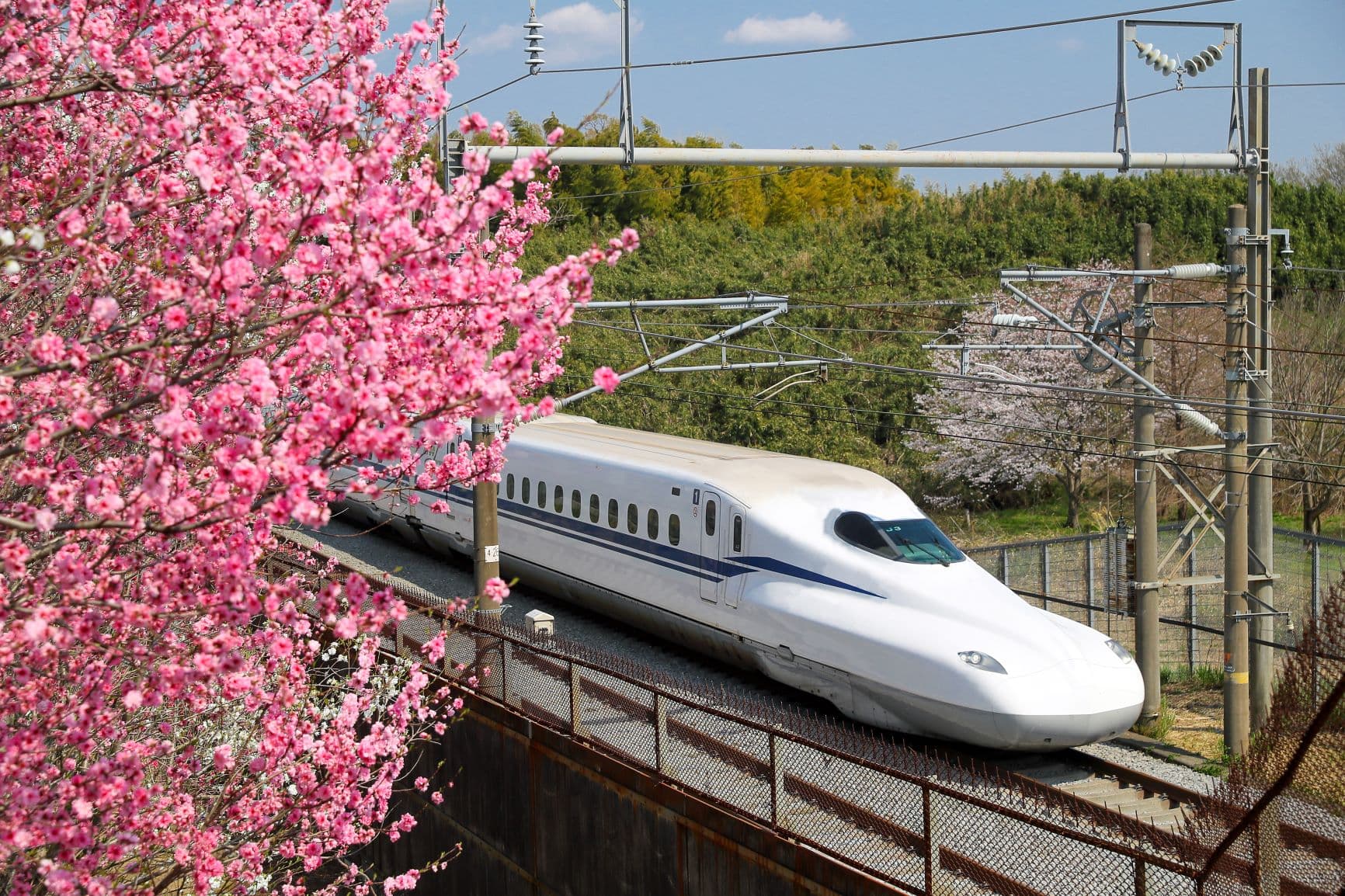
The Shinkansen — Japan's “bullet train” — entered commercial service on October 1, 1964, connecting Tokyo and Osaka in time for the Olympic Games. It was the world's first high-speed rail system, and six decades later, it remains the benchmark against which all others are measured.
Operated by JR Central on the Tokaido line, the Shinkansen achieves operational speeds above 200 mph in a U.S. project context, with a frequency, reliability, and safety record that no other transportation system in the world has matched.
The Shinkansen does not share track with freight or local trains. It operates on a fully dedicated right-of-way with no at-grade crossings — a design principle that is fundamental to its safety and performance.
Dedicated Right-of-Way
No grade crossings, no freight sharing. The Shinkansen operates on exclusive infrastructure purpose-built for high-speed performance and maximum safety.
Precision Punctuality
Average delay measured in seconds. JR Central's operational culture and infrastructure redundancy have made the Shinkansen the world's most reliable transportation system.
Proven Safety Record
Over 7 billion passengers carried with zero fatalities attributable to train operations. This record has been maintained through earthquakes, storms, and decades of continuous service.
High Frequency
18 trains per hour depart on the Tokaido line, demonstrating that high-speed rail can match or exceed aviation frequency with superior downtown-to-downtown connectivity.
Seismic Resilience
Japan's Shinkansen includes advanced seismic detection and automatic braking systems, with an unblemished safety record through some of the world's most severe earthquakes.
U.S. Project Applicability
Shinkansen technology is directly applicable to U.S. corridor contexts, including Texas (Dallas–Houston) and Cascadia, where corridor characteristics align well with Shinkansen operating parameters.
Purpose-Built Infrastructure for Maximum Performance
Both the Shinkansen and SCMAGLEV operate on fully dedicated infrastructure — designed from the ground up for high-speed performance with no shared use by freight, commuter, or conventional rail.
The Shinkansen uses ballasted and slab track systems with continuous welded rail, precision alignment tolerances, and extensive grade separation. The SCMAGLEV guideway is a U-shaped concrete structure with Levitation and Guidance Coils, and Propulsion Coils attached to the side walls.
Both systems are designed for extreme geometric precision — the alignment requirements are measured in millimeters — ensuring the smoothness, safety, and operational performance that define these technologies.
Zero Fatalities. Unmatched Reliability. An Operational Reality.
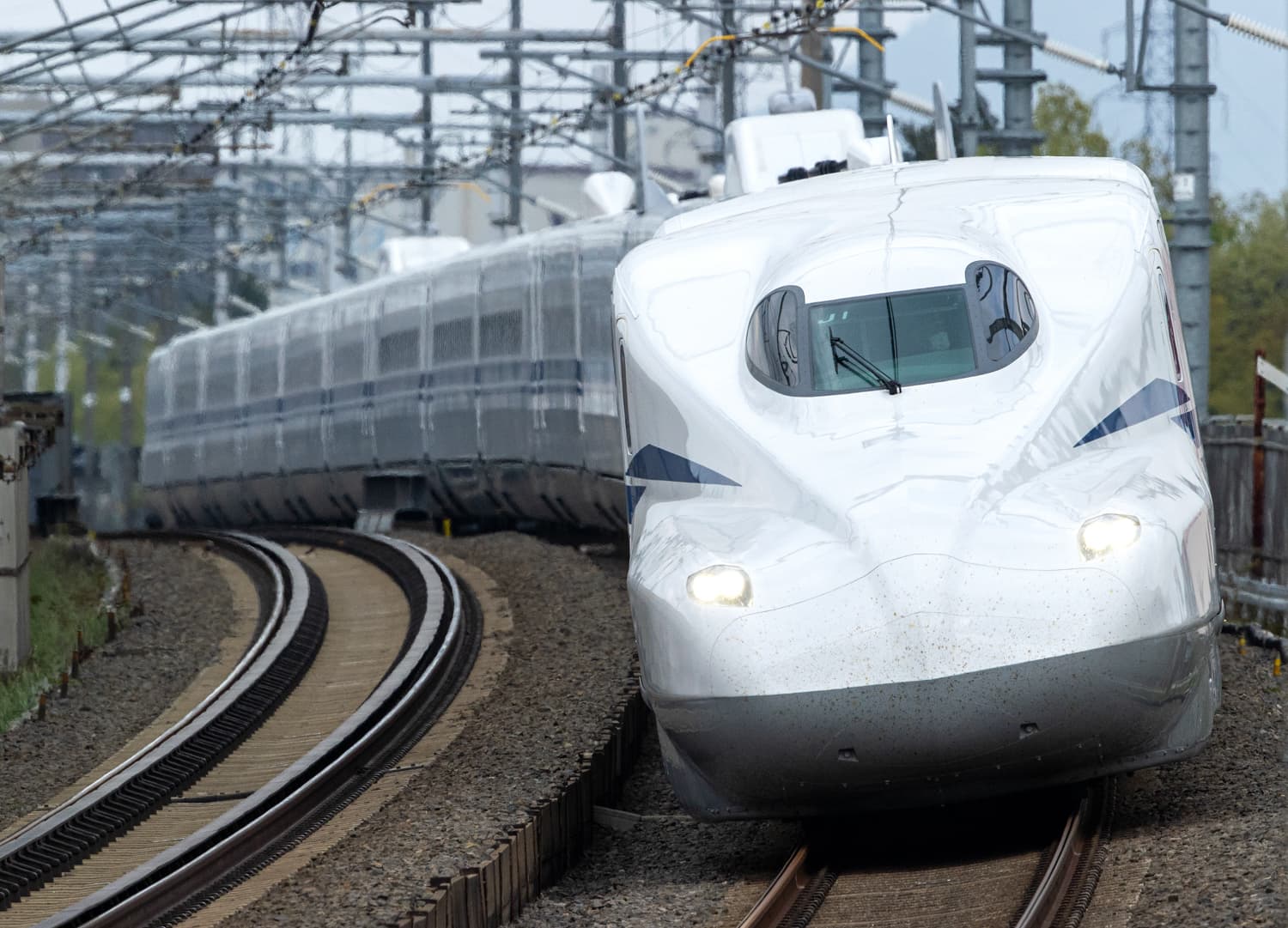
The Shinkansen has operated continuously since 1964, carrying more than 7 billion passengers on the Tokaido line alone, with zero passenger fatalities attributable to train operations. This record has been maintained through major earthquakes, extreme weather events, and decades of intensifying usage.
This achievement is the product of a systems approach to safety: dedicated infrastructure, no grade crossings, advanced seismic detection and automatic braking, rigorous maintenance protocols, and a deeply ingrained operational culture that treats punctuality and safety as inseparable.
USJIA works to ensure that American policymakers, planners, and investors fully understand this record.